The Climate Contribution Framework methodology
The Climate Contribution Framework (CCF) does not replace existing climate leadership standards or benchmarking methodologies. It leverages and builds on them, connecting heterogeneous scores, ratings, and certifications into a single, fair, and comparable indicator of corporate contribution to global net zero.

How the analysis works
Carbon footprint reduction
Pillar A evaluates companies' transition plans across their operations, their value chain, and their policy:
Each is weighted and aggregated into a single pillar score.
Climate solutions
Pillar B recognizes companies whose products and services enable avoided emissions or generate negative emissions outside their value chain. It evaluates:
This pillar connects green revenue ambition with measurable climate mitigation impact.
Climate finance
Pillar C values voluntary financial contributions to climate mitigation — particularly those made outside the company's value chain. It covers a broad spectrum of instruments, including:
Only voluntary contributions are included, and strict exclusions prevent double counting with operational decarbonization.
Three pillars.
One equation.
Sector-adjusted results.
Three non-substitutable pillars, sector-weighted and combined into a single score. No pillar compensates for others. The sum α + β + γ represents the sector’s overall climate materiality — between 10 and 100.
Each pillar score (A, B, C) is weighted by its sectoral coefficient and summed: A×α + B×β + C×γ. This raw score reflects the company’s actual climate actions, adjusted for what matters most in its industry—emissions reduction, climate solutions, or climate financing.
The sum of sector-specific weightings (α + β + γ), ranging from 10 to 100, indicates a company’s maximum climate materiality. For example, a contribution potential of 96 means the company operates in sectors where almost all contribution pillars are critical to achieving Global net zero.
The sum of coefficients, floored at 10, capped at 100, indicates the scale of one company’s climate contribution. A contribution potential of 96 means the company has the potential to have very significant positive impact to helping us reduce emissions to 1.5C, compared to another company that scores lower.
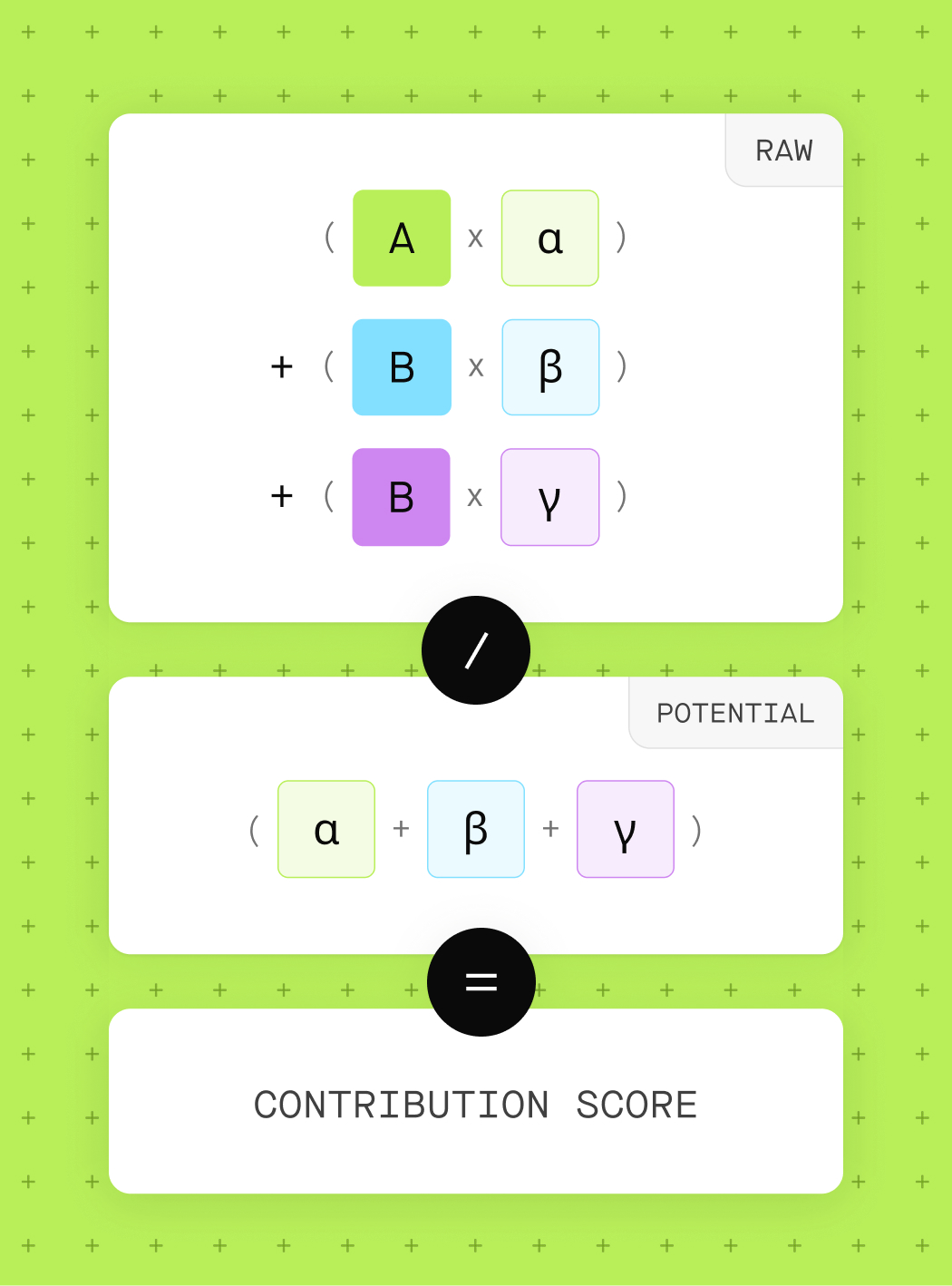
This architecture ensures that companies are evaluated on the most material levers for their business model, while preserving cross-sector comparability.
How scoring works
From external frameworks to comparable scores.
Each sub-pillar is first assessed from recognized external framework results.
The Translation Kit is a set of standardized rules designed to convert any assessment framework output into a normalized score on a 0–100 scale.
They are then adjusted with two credibility factors: the assessment framework score* and the assessment quality score**.
This mechanism ensures that companies are rewarded not only for their performance, but also for the rigor with which that performance is assessed. If multiple frameworks apply to the same dimension, the highest score is retained — being assessed multiple times is therefore always beneficial.
Ensuring fairness across sectors.
Different sectors play fundamentally distinct roles in the climate transition. The CCF derives specific sector coefficients for each pillar from activity classifications covering over 100 sub-sectors. This approach prioritizes the most assessment on the most material levers and prevents any compensation between structurally different pillars.
The weight of the Reduction pillar is correlated to the sector’s carbon intensity across Scopes 1, 2, and 3. The more a sector emits, the more material the decarbonization of its operations.
The weight of the Solutions pillar reflects the sector’s technological potential to produce goods or services enabling avoided emissions by other actors. For example, battery manufacturer has a structurally higher β than a service provider.
The weight of the Finance pillar integrates sector net margins and historical responsibility. It reflects the capacity, and obligation, to contribute financially to mitigation beyond one’s own value chain.
This approach: focuses assessment on the most material levers for each sector, creates a level playing field across industries, and prevents compensation between structurally different pillars.
Making the framework operational for all companies.
The two tools ensuring broad adoption.
A conversion system that transforms heterogeneous results (numerical scores, levels, labels, ratios) into normalized results from 0 to 100. It makes assessments from very different frameworks directly comparable.
A streamlined methodology designed to assess climate performance in companies that lack external assessments on one or more sub-pillars within Pillar A, particularly small and medium-sized enterprises (SMEs).
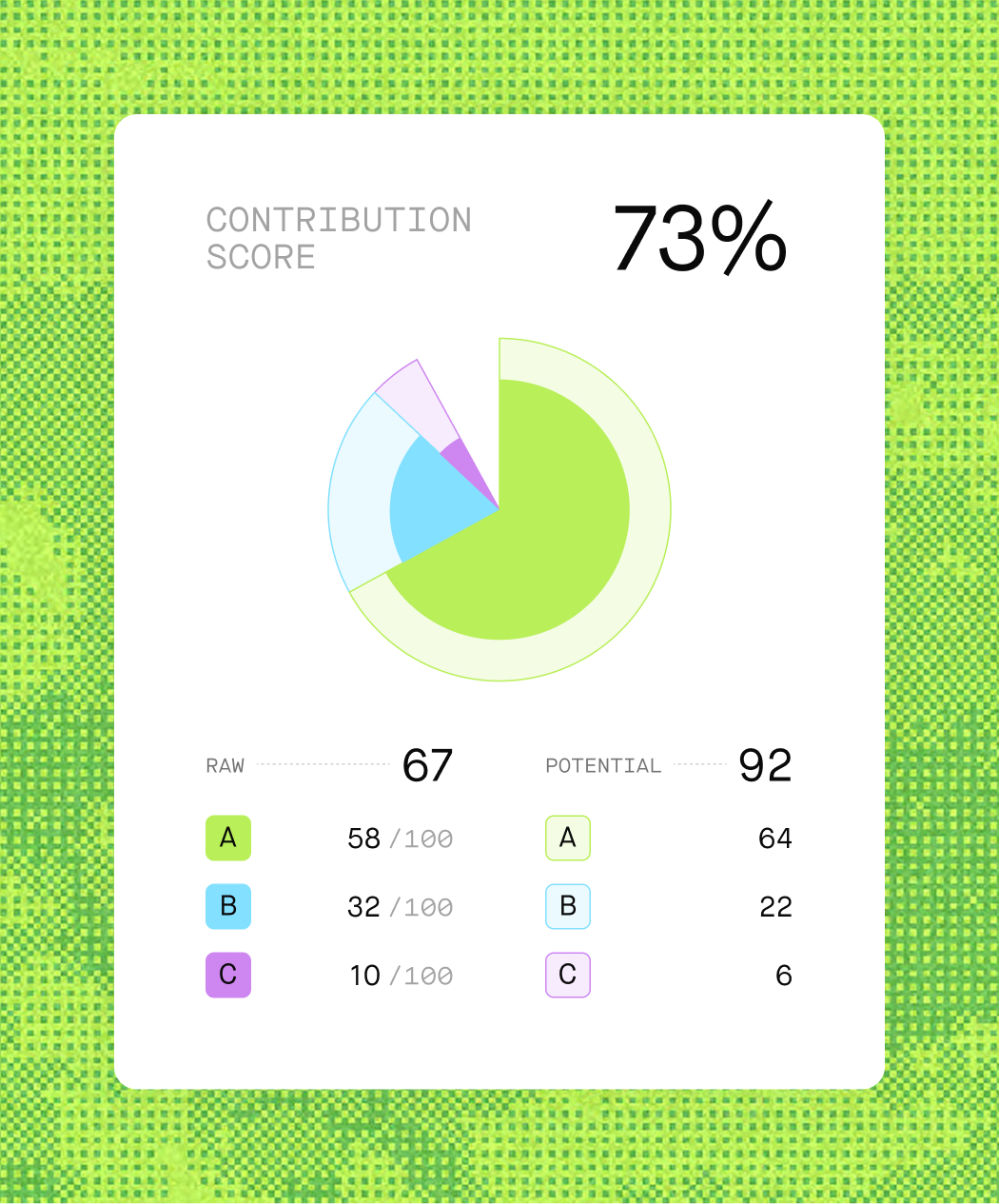
Three clear results:
Contribution potential,
raw performance,
and contribution score
This structure answers both "What could you do?" and "What are you doing?", creating accountability while recognizing the diversity of pathways. The result: actionable insights, clear signals on areas where companies should improve and where capital can generate maximum impact.
Maximum achievable climate contribution based on sector
Currently achieved climate contribution.
Ratio between achieved potential and achievable potential in %
Actionable data for companies, investors, and public policy makers
The CCF was designed to produce actionable results, not just scores. Each audience has a distinct use angle, adapted to their decision needs.
To plan, report, and prioritize high-contribution impact actions. The CCF scorecard identifies the least exploited levers and directs efforts toward what matters most for the sector.
To identify real climate leaders and allocate capital accordingly. The CCF’s cross-sector comparability enables robust portfolio analysis, beyond footprint reduction trajectories alone.
To complement reporting obligations with an independent, robust, and comparable reference. The CCF provides an aggregated view of real corporate climate action, at the sector or economy level.
Want to value your role
in the transition to net zero?
Start the 3-minute self-assessment to explore the methodology in detail.